- Shabhana s
- Backlink Generators, Backlinks, Domain Authority, Link Building, Link Building Strategy, Off Page SEO, Organic Traffic, Search Engine Optimization, Search Rankings, Seo, SEO Marketing, SEO Strategy, SEO Tools, Website SEO
- 0 Comments
- 6 Views
Backlinks have long been an important part of search engine optimization. When another website links to your website, that link can help search engines discover your content and may contribute to how your site’s authority and relevance are evaluated. As a result, businesses and marketers are constantly looking for efficient ways to build backlinks.
This has led to the popularity of backlink generators, tools and platforms that claim to help websites create or discover links automatically. However, generating a large number of backlinks does not necessarily mean achieving better SEO results. Search engines increasingly emphasize relevance, quality, usefulness, and natural link profiles.
For businesses investing in SEO in 2026, understanding how backlink generators work—and where automated link building can create risks—is essential.
What Are Backlink Generators?
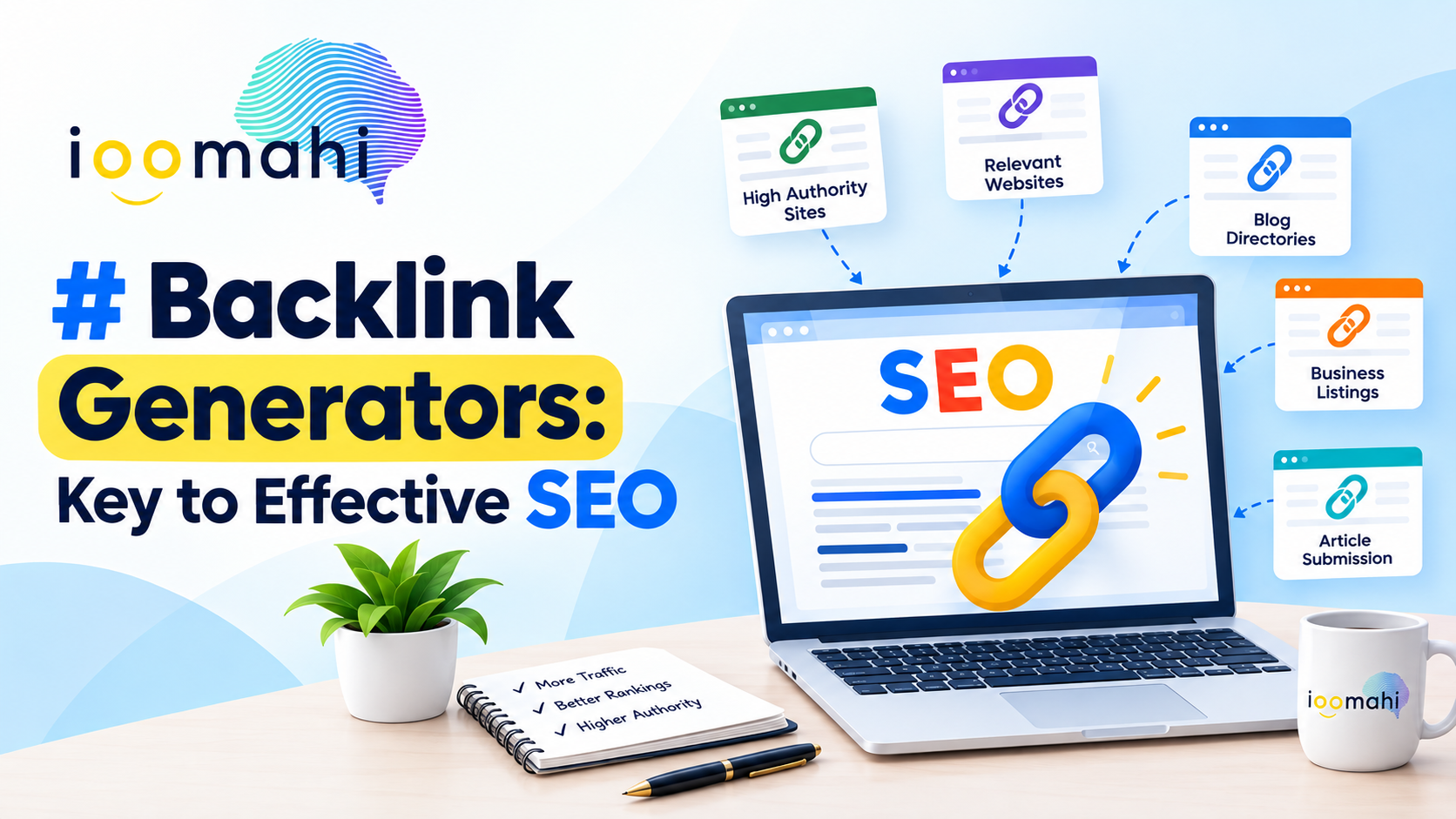
Backlink generators are online tools designed to help website owners generate, discover, or build backlinks to their websites.
Depending on the tool, a backlink generator may provide links through directories, social profiles, websites, blogs, forums, bookmarking platforms, or other online properties.
Some tools focus on identifying potential backlink opportunities, while others automatically create links across multiple websites.
How Do Backlink Generators Work?
The process varies from one platform to another. Generally, users enter information such as:
- Website URL
- Target keywords
- Website category
- Anchor text
- Business information
The tool then attempts to identify or create backlink opportunities based on the information provided.
However, marketers should distinguish between finding legitimate link opportunities and automatically creating large volumes of links. These approaches can have very different SEO implications.
Why Are Backlinks Important for SEO?
A backlink is essentially a link from one website to another. When a reputable and relevant website references your content, it can provide several potential benefits.
Search Engine Discovery
Links can help search engine crawlers discover new pages and understand relationships between different websites and pieces of content.
Referral Traffic
A useful backlink can send visitors directly to your website. In some cases, referral traffic may be more valuable than the SEO benefit of the link itself.
Authority and Trust Signals
Links from authoritative and relevant websites can contribute to how search engines evaluate a website’s prominence and credibility.
However, not all backlinks carry the same value. A single relevant editorial link from a respected website can be considerably more meaningful than hundreds of unrelated, low-quality links.
Read this – Why every business need SEO?
Are Backlink Generators Effective?
The answer depends heavily on what the tool actually does.
A tool that helps identify relevant websites, analyze competitors’ backlinks, discover broken-link opportunities, or organize outreach can be useful as part of a broader SEO workflow.
On the other hand, tools that promise thousands of backlinks instantly may create links that have little relevance or value.
Quantity vs. Quality
A common misconception is that more backlinks automatically produce better rankings.
Modern SEO is more complex. Search engines evaluate many signals, and artificially generated or manipulative links may not provide the desired benefits.
Instead of focusing solely on backlink volume, marketers should consider:
- Relevance of the linking website
- Authority and reputation of the source
- Context surrounding the link
- Editorial nature of the link
- Potential referral traffic
- Overall quality of the website
Potential Benefits of Backlink Generation Tools
Used carefully, backlink tools can support several parts of an SEO strategy.
1. Finding Link Opportunities
SEO tools can help marketers discover websites that may be relevant to their industry or content.
2. Competitor Backlink Research
Analyzing competitors’ backlink profiles can reveal websites, publications, directories, and resources that may also be relevant to your business.
3. Saving Research Time
Manually identifying backlink opportunities can take considerable time. Automation can help organize large amounts of backlink data more efficiently.
4. Monitoring Existing Links
Some backlink platforms can monitor whether previously acquired links remain active and identify changes in a website’s backlink profile.
Read this – SEO in 2026 – Beyond Keywords and Rankings
Risks of Automated Backlink Generation
Automated link building can create significant SEO problems when used aggressively.
Low-Quality Links
Automatically generated backlinks may come from websites with little relevance or useful content. Such links may provide little SEO value.
Spam Signals
Large numbers of unnatural links can make a website’s backlink profile appear manipulative.
Irrelevant Anchor Text
Using the same keyword-rich anchor text repeatedly can create an unnatural link profile.
Poor Website Reputation
If links are generated through spammy websites, link networks, or unrelated platforms, they may not contribute positively to a site’s overall SEO strategy.
For these reasons, marketers should be cautious about services promising extremely large numbers of backlinks for very little effort.
Read this – Best Small SEO Tools in 2026 – Complete Guide for Small Businesses
Better Alternatives to Backlink Generators
Rather than relying entirely on automated link creation, businesses can build backlinks through sustainable SEO practices.
Create Link-Worthy Content
Original research, detailed guides, useful statistics, industry reports, tools, case studies, and authoritative resources are more likely to attract natural references.
Guest Contributions
Writing genuinely useful content for relevant publications can create legitimate opportunities to earn exposure and links, provided the practice follows the publication’s guidelines.
Digital PR
Businesses can pitch original research, expert commentary, data, and newsworthy stories to journalists and industry publications.
Broken Link Building
Marketers can identify relevant broken resources and suggest useful replacement content from their own websites where appropriate.
Resource Pages
Some websites maintain curated resource pages. If your content genuinely adds value, it may be appropriate to suggest it as a resource.
Build Industry Relationships
Networking with publishers, experts, businesses, creators, and industry organizations can lead to natural mentions and editorial links over time.
How to Use Backlink Tools Safely
If you use a backlink generator or link-building platform, evaluate it carefully before creating links.
Check the Source
Find out where the tool creates or obtains links. Avoid platforms that provide links from obviously unrelated or low-quality websites.
Prioritize Relevance
A backlink from a website related to your industry or topic is generally more meaningful than an unrelated link.
Avoid Bulk Promises
Be cautious with services promising thousands of backlinks in a very short period.
Review Anchor Text
Use natural anchor text rather than repeatedly forcing exact-match commercial keywords.
Monitor Your Backlink Profile
Regularly review your backlinks to identify unusual patterns, unexpected sources, and potentially harmful links.
Backlink Generators vs. Manual Link Building
| Factor | Backlink Generators | Manual/Strategic Link Building |
|---|---|---|
| Speed | Usually faster | Generally slower |
| Research effort | Lower | Higher |
| Scalability | High | Moderate |
| Control over links | Varies | Usually higher |
| Relevance | Depends on tool | Can be highly targeted |
| Long-term value | Varies significantly | Often stronger when links are earned naturally |
| Relationship building | Limited | Stronger |
| Risk | Can be higher with automated spam | Generally easier to control |
The right approach depends on the tool and how it is used. Automation can assist with research and monitoring, while human judgment remains important for evaluating link quality and relevance.
Key Takeaways
- Backlink generators can help automate certain parts of link-building research.
- Large quantities of backlinks do not automatically lead to better SEO performance.
- Relevant, high-quality links are generally more valuable than mass-generated links.
- Automated link creation can create SEO risks when it produces unnatural or spammy patterns.
- Content marketing, digital PR, outreach, and genuine industry relationships can support sustainable link acquisition.
- Backlink tools are most useful when they complement—not replace—a broader SEO strategy.
- Always evaluate the quality, relevance, and context of backlinks before pursuing them.
Conclusion
Backlink generators can be useful SEO tools, but they should not be treated as a shortcut to higher search rankings. The effectiveness of any backlink strategy depends on the quality and relevance of the links, the authority of the websites involved, and the overall health of a site’s SEO profile.
For businesses in 2026, a sustainable approach is to combine backlink research and monitoring tools with high-quality content, digital PR, strategic outreach, and genuine industry relationships. Instead of chasing the largest possible number of backlinks, marketers should focus on earning links that make sense for their audience and provide real value.
A strong backlink profile is ultimately built around relevance, credibility, useful content, and long-term SEO practices rather than simply generating links at scale.