- Shabhana s
- digital marketing, Email Automation, Email Campaign Optimization, Email Campaigns, Email Marketing, Email Marketing 2026, Email Marketing Strategy, Email Marketing Tips, Lead Generation, Marketing Strategy
- 0 Comments
- 15 Views
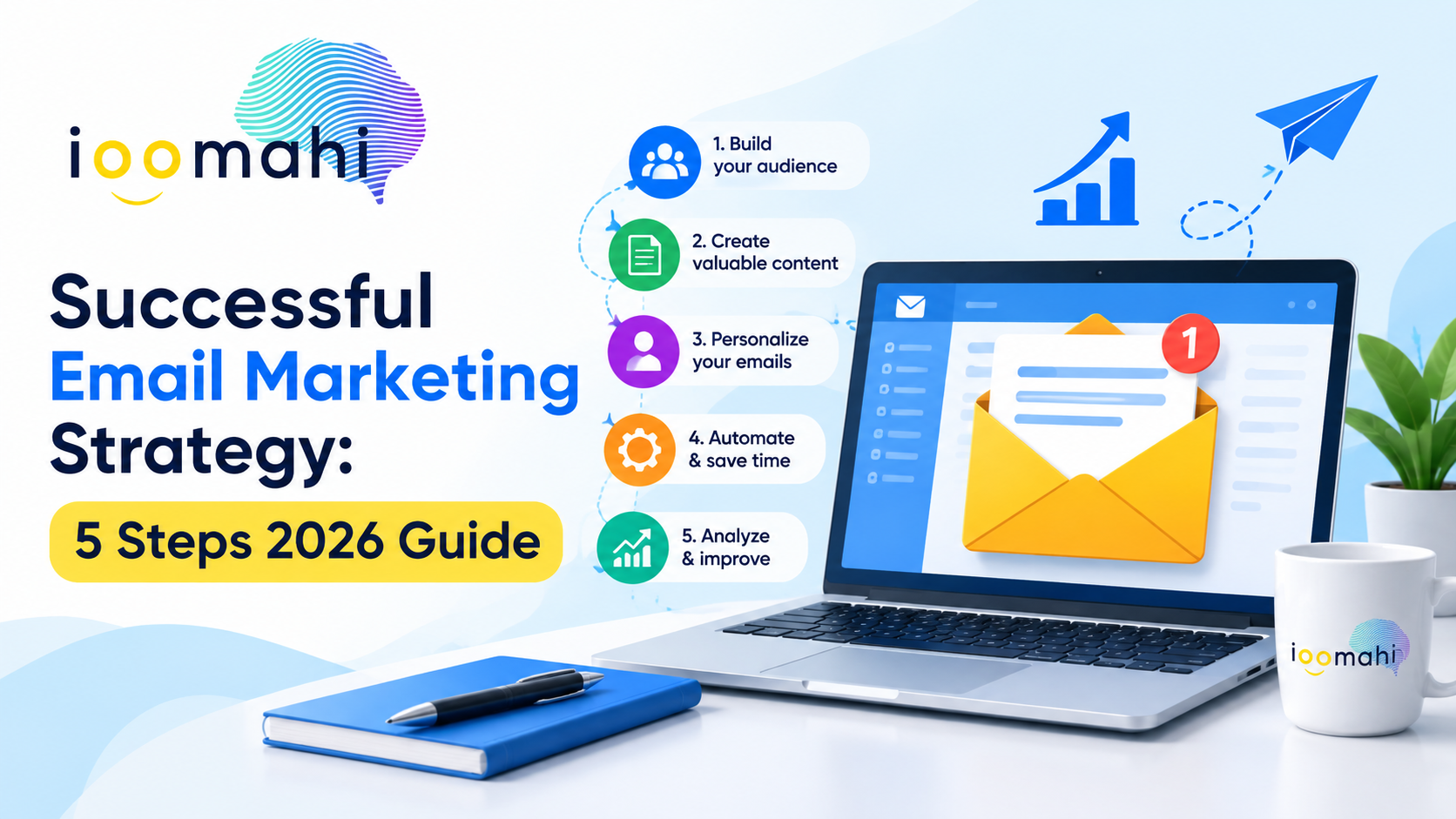
Email marketing remains an important channel for businesses that want to communicate directly with customers and prospects. However, simply sending promotional emails is not enough to build a successful campaign. In 2026, marketers need a structured strategy that combines audience research, valuable content, personalization, automation, and performance analysis.
A successful email marketing strategy starts with understanding who you are communicating with and what those people actually need. From building a quality subscriber list to creating relevant campaigns and measuring results, every step can influence engagement and conversions.
This 5-step email marketing strategy for 2026 explains how businesses can create more relevant campaigns, strengthen customer relationships, and make better use of email as part of their overall digital marketing strategy.
1. Define Your Email Marketing Goals
Before creating an email campaign, determine exactly what you want to achieve.
Your objective could be generating leads, increasing sales, promoting a product, driving website traffic, nurturing prospects, improving customer retention, or increasing repeat purchases.
Set Measurable Objectives
Instead of setting a general goal such as “get more customers,” create measurable objectives. For example:
- Increase qualified leads from email campaigns
- Improve website traffic from newsletters
- Generate more product sales
- Increase repeat purchases
- Improve customer engagement
- Promote a new product or service
Clear objectives make it easier to select the right content, audience, and metrics.
2. Build and Segment a Quality Email List
A strong email list is one of the foundations of successful email marketing. Businesses should focus on attracting people who have a genuine interest in their products, services, or content.
Avoid purchasing random email databases. Instead, encourage visitors and customers to voluntarily subscribe through websites, landing pages, lead magnets, registrations, and other relevant touchpoints.
Segment Your Subscribers
Not every subscriber has the same interests or purchasing intent.
You can segment your audience based on factors such as:
- Location
- Industry
- Previous purchases
- Website activity
- Content interests
- Customer lifecycle stage
- Engagement history
Segmentation allows marketers to deliver more relevant messages rather than sending exactly the same email to everyone.
Read here – Email Marketing Automation
3. Create Valuable and Personalized Content
Once you have identified your audience, focus on the quality and relevance of your emails.
A successful email should give recipients a reason to open, read, and act on it. Depending on your business, this could include educational content, product recommendations, special offers, company updates, industry insights, or useful resources.
Personalize the Customer Experience
Personalization can go beyond adding a subscriber’s first name.
Businesses can use available customer information and behavior to create more relevant campaigns. For example, an online store could recommend products based on previous interactions, while a B2B company could send content based on a prospect’s industry or stage in the buying journey.
The goal is to make emails feel relevant rather than generic.
4. Use Automation and Test Your Campaigns
Email automation can help businesses communicate with customers at appropriate moments without manually sending every message.
Common automated campaigns include:
- Welcome emails
- Lead-nurturing sequences
- Abandoned-cart emails
- Post-purchase emails
- Customer onboarding
- Re-engagement campaigns
- Birthday or anniversary messages
Test Different Elements
Testing can help identify which approaches produce better results.
You can experiment with:
- Subject lines
- Email copy
- Calls to action
- Images
- Layouts
- Offers
- Sending times
A/B testing allows marketers to compare different versions of an email and use the results to improve future campaigns.
5. Measure Performance and Optimize Continuously
Launching an email campaign is not the final step. Successful marketers monitor performance and use the results to improve future campaigns.
Important metrics can include:
- Open rate
- Click-through rate
- Conversion rate
- Unsubscribe rate
- Bounce rate
- Revenue generated
- Return on investment
Focus on Business Outcomes
High engagement numbers can be useful, but marketers should also examine whether email campaigns are contributing to meaningful business results.
For example, a campaign may receive many clicks but generate very few sales. Another campaign may have fewer clicks but produce significantly more conversions.
Analyzing the complete customer journey provides a better understanding of campaign effectiveness.
Read here – Best Email Marketing Tools
Email Marketing Best Practices for 2026
A successful email marketing strategy should also follow several practical principles.
Keep Emails Mobile-Friendly
Many people access email through smartphones. Use responsive layouts, readable fonts, concise copy, and clear calls to action.
Write Strong Subject Lines
The subject line is often the first element a recipient sees. Keep it relevant and clear without making misleading promises.
Provide Real Value
Avoid making every email a sales pitch. Educational information, useful resources, exclusive content, and relevant recommendations can help maintain audience interest.
Maintain a Clean Email List
Regularly review inactive or invalid contacts. Keeping your database healthy can improve campaign quality and reduce unnecessary email activity.
Respect Subscriber Preferences
Give subscribers appropriate ways to manage their communication preferences and unsubscribe. Respecting user choices is an important part of sustainable email marketing.
Key Takeaways
- Define clear objectives before launching email campaigns.
- Build an audience through permission-based list growth.
- Segment subscribers according to relevant characteristics and behavior.
- Create useful, personalized content.
- Use automation to deliver timely communications.
- Test subject lines, content, offers, and calls to action.
- Track conversions and business outcomes, not just engagement metrics.
- Continuously optimize your email marketing strategy based on performance.
Read here – How to Become a Successful Email Marketing Campaign Manager
Conclusion
A successful email marketing strategy in 2026 requires more than sending regular newsletters. Businesses need to understand their audience, build quality subscriber lists, deliver valuable content, personalize communication, automate relevant customer journeys, and continuously analyze performance.
The five-step approach—setting goals, building and segmenting your list, creating valuable content, using automation and testing, and measuring performance—provides a practical foundation for developing effective email campaigns.
When email marketing is treated as an ongoing customer relationship rather than a one-time promotional activity, it can become an important part of a broader digital marketing strategy.