- Shabhana s
- Content Creation, YouTube 2026, YouTube Channel, YouTube Growth, YouTube Marketing, YouTube Monetization, YouTuber Career
- 0 Comments
- 16 Views
Becoming a YouTuber in 2026 is no longer just about uploading videos and hoping they go viral. YouTube has become a major platform for creators, educators, businesses, entertainers, reviewers, and personal brands to build audiences and create multiple income opportunities.
The good news is that you don’t need an expensive studio or professional camera to start. A smartphone, a clear content idea, basic editing skills, and a consistent publishing strategy can be enough to begin.
However, growing a successful YouTube channel requires more than simply creating videos. You need to understand your audience, develop a content strategy, improve titles and thumbnails, study analytics, and create videos that give viewers a reason to keep watching.
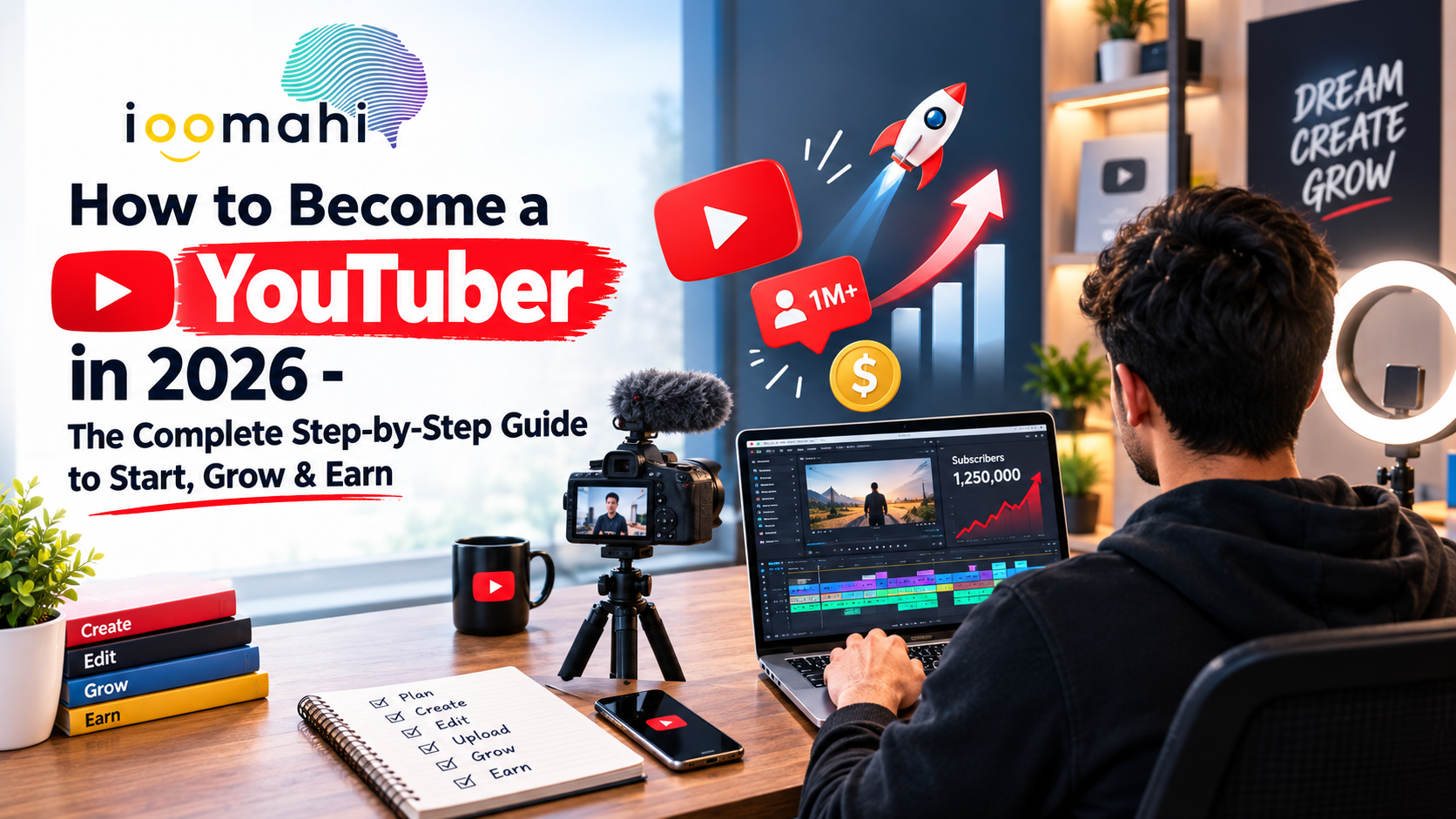
This guide explains how to become a YouTuber in 2026, from choosing a niche and creating your first channel to growing an audience and exploring monetization opportunities.
Step 1: Choose Your YouTube Niche
The first decision is choosing what your channel will be about.
A niche helps viewers understand what they can expect from your channel and makes it easier to develop a consistent content strategy.
Popular YouTube niches include:
- Technology
- Gaming
- Food and cooking
- Travel
- Personal finance
- Education
- Fitness
- Beauty and fashion
- Business
- Digital marketing
- Entertainment
- Lifestyle
- Tutorials and how-to content
Choose a Niche You Can Sustain
Don’t select a topic simply because it is trending.
Ask yourself:
- Do I enjoy creating content about this topic?
- Do I have useful knowledge or experience?
- Can I create at least 50–100 video ideas?
- Is there an audience interested in this subject?
- Can the niche support potential monetization?
A sustainable niche gives you more opportunities to create consistently.
Step 2: Define Your Target Audience
Before creating your first video, identify the person you want to reach.
For example, instead of targeting everyone interested in technology, you could focus on:
“Beginners who want simple explanations of AI tools.”
A specific audience makes it easier to decide what topics, language, presentation style, and video formats to use.
Step 3: Create Your YouTube Channel
Creating a YouTube channel is relatively simple.
You need a Google account and a channel name that matches your content identity.
Your channel should have:
- A memorable name
- Profile picture or logo
- Channel banner
- Description
- Relevant links
- Clear content positioning
Your branding doesn’t need to be complicated when you’re starting. Focus on making it clear and professional.
Read this – SEO in 2026 – Beyond Keywords and Rankings
Step 4: Plan Your Content Strategy
Don’t start by randomly uploading videos.
Create several content categories, often called content pillars.
For example, a digital marketing channel could have:
- SEO tutorials
- Google Ads guides
- Social media marketing
- Email marketing
- Marketing tools and reviews
These pillars provide a framework for generating content consistently.
Step 5: Research Video Ideas
Content ideas are the foundation of channel growth.
Look for questions people are already asking.
You can discover ideas through:
- YouTube search suggestions
- Competitor channels
- Comments
- Online communities
- Industry trends
- Frequently asked questions
- Your own audience feedback
The goal isn’t to copy another creator. Instead, identify topics that viewers care about and develop your own useful approach.
Step 6: Start With the Equipment You Have
You don’t need a professional camera to begin.
A basic setup can include:
- Smartphone
- Tripod
- External microphone
- Simple lighting
- Editing software
Audio quality is particularly important because viewers may tolerate average video quality more easily than poor or distracting sound.
As your channel grows, you can gradually invest in better cameras, microphones, lighting, and other equipment.
Step 7: Learn Basic Video Editing
Editing can dramatically improve the viewing experience.
Start by learning how to:
- Remove unnecessary pauses
- Cut mistakes
- Add text
- Add background music appropriately
- Improve audio
- Use transitions sparingly
- Add images or screen recordings
- Create engaging openings
You don’t need complicated effects. Good editing should support the content rather than distract from it.
Step 8: Create Strong YouTube Thumbnails
A thumbnail is one of the first things potential viewers see.
A good thumbnail should communicate the video’s main idea quickly.
Consider:
- Clear visual hierarchy
- Readable text
- Strong contrast
- One central idea
- Consistent branding
- A compelling visual
Avoid overcrowding the thumbnail with too many words or images.
Step 9: Write Better Titles
Your title should accurately communicate the value of the video.
For example:
Weak:
“SEO Tips”
More specific:
“7 SEO Mistakes Beginners Should Avoid in 2026”
The second title gives viewers a clearer reason to click while setting an expectation for the content.
Avoid misleading titles or thumbnails. Getting clicks is useful only when the video delivers what the viewer expected.
Step 10: Focus on Viewer Retention
Getting a click is only the beginning.
You also want viewers to continue watching.
Start videos by quickly explaining:
- What the video is about
- Why it matters
- What the viewer will learn
- What they can expect
Avoid unnecessarily long introductions.
As your channel grows, study audience-retention data to understand where viewers lose interest.
Step 11: Upload Consistently
Consistency helps you develop a sustainable production routine.
You don’t necessarily need to upload every day.
A realistic schedule could be:
- One long-form video per week
- Two long-form videos per week
- Several Shorts alongside long-form content
The best schedule is one you can maintain without sacrificing quality.
Step 12: Use YouTube Analytics
YouTube Analytics can help you understand how your audience responds to your videos.
Pay attention to metrics such as:
Impressions
Shows how often YouTube presents your thumbnail to potential viewers.
Click-Through Rate
Helps indicate how often people click after seeing your video impression.
Audience Retention
Shows how viewers behave throughout the video.
Watch Time
Provides insight into the amount of time viewers spend watching your content.
Traffic Sources
Shows where viewers discover your videos.
Use these metrics to identify patterns and improve future content.
Step 13: Use Shorts Strategically
YouTube Shorts can help creators reach new audiences through short-form vertical videos.
You can use Shorts to:
- Answer quick questions
- Share tips
- Create highlights
- Explain concepts
- Introduce your channel
- Test content ideas
However, Shorts and long-form videos can serve different viewing behaviours. Develop a strategy that connects the two formats rather than assuming every Shorts viewer will automatically become a long-form subscriber.
Read this – 1-Top-10-YouTube-SEO-Tools
Step 14: Build a Community
A successful YouTube channel isn’t only about views.
Respond to relevant comments, ask viewers questions, and encourage meaningful discussion.
You can also use community features to share updates, polls, questions, and other content that keeps your audience engaged between uploads.
Over time, viewers can become a community around your content rather than simply one-time visitors.
Step 15: Understand YouTube Monetization
YouTube creators can potentially earn money through several channels.
Depending on eligibility and location, opportunities may include:
- YouTube advertising revenue
- Channel memberships
- Super Thanks
- Super Chat and Super Stickers
- Brand sponsorships
- Affiliate marketing
- Merchandise
- Digital products
- Courses or consulting
- Services
Eligibility requirements vary by monetization feature and can change, so creators should check YouTube’s current official requirements before planning around a specific threshold.
Step 16: Don’t Depend on Ad Revenue Alone
For many creators, advertising is only one part of the business model.
A channel focused on a specific professional niche could eventually generate income through:
YouTube → Audience → Trust → Products/Services → Revenue
For example, a marketing creator could combine YouTube content with consulting, affiliate partnerships, digital products, or educational services.
The right model depends on the creator’s audience, niche, skills, and business objectives.
Step 17: Use AI Responsibly
AI tools can help creators with parts of the production workflow.
They can assist with:
- Brainstorming
- Research organization
- Outlining
- Transcription
- Caption creation
- Editing assistance
- Content repurposing
- Thumbnail ideation
However, simply generating large amounts of generic AI content is not a substitute for originality, expertise, personality, or audience understanding.
Your unique perspective is one of the biggest assets you have as a creator.
Common Mistakes New YouTubers Should Avoid
Changing Niches Too Frequently
Constantly switching topics can make it difficult to develop a clear audience.
Chasing Every Trend
Trends can provide opportunities, but building an entire channel around them may make your content strategy unstable.
Ignoring Audio Quality
Poor sound can make otherwise useful videos difficult to watch.
Focusing Only on Subscribers
Subscriber count matters, but watch time, returning viewers, engagement, and business outcomes can provide additional insights.
Giving Up Too Early
A new channel may require significant experimentation before you understand which topics, formats, titles, and thumbnails work for your audience.
Read this – 10 Best YouTube Marketing Tools to optimize the Reach of YouTube Videos
A Simple 90-Day YouTube Growth Plan
Month 1: Foundation
- Select your niche
- Define your audience
- Create your channel
- Develop content pillars
- Research 30–50 video ideas
- Publish your first videos
Month 2: Experimentation
- Test different topics
- Improve thumbnails
- Experiment with titles
- Study audience retention
- Publish consistently
- Start experimenting with Shorts
Month 3: Optimization
- Identify your strongest topics
- Analyze traffic sources
- Improve your opening hooks
- Create follow-up videos
- Build series around successful topics
- Develop a sustainable publishing workflow
Key Takeaways
- Choose a niche you can consistently create content about.
- Understand your target audience before producing videos.
- Start with equipment you already have.
- Prioritize audio, storytelling, and editing.
- Create clear and compelling titles and thumbnails.
- Use YouTube Analytics to make informed content decisions.
- Combine Shorts and long-form content strategically.
- Build a community rather than focusing only on subscriber numbers.
- Explore multiple revenue streams as your channel develops.
- Use AI as a productivity tool while maintaining originality and authenticity.
Conclusion
Learning how to become a YouTuber in 2026 is ultimately about developing a repeatable content system. You don’t need to begin with expensive equipment, a huge audience, or a perfect production setup.
Start with a clear niche, understand your viewers, publish useful content, learn from analytics, and improve with every video. As your skills and audience develop, you can explore advertising, sponsorships, affiliate marketing, products, services, and other income opportunities.