- Shabhana s
- AI Search, Content SEO, Search Engine Optimization, Search Intent, SEO 2026, SEO Trends, Technical SEO
- 1 Comment
- 14 Views
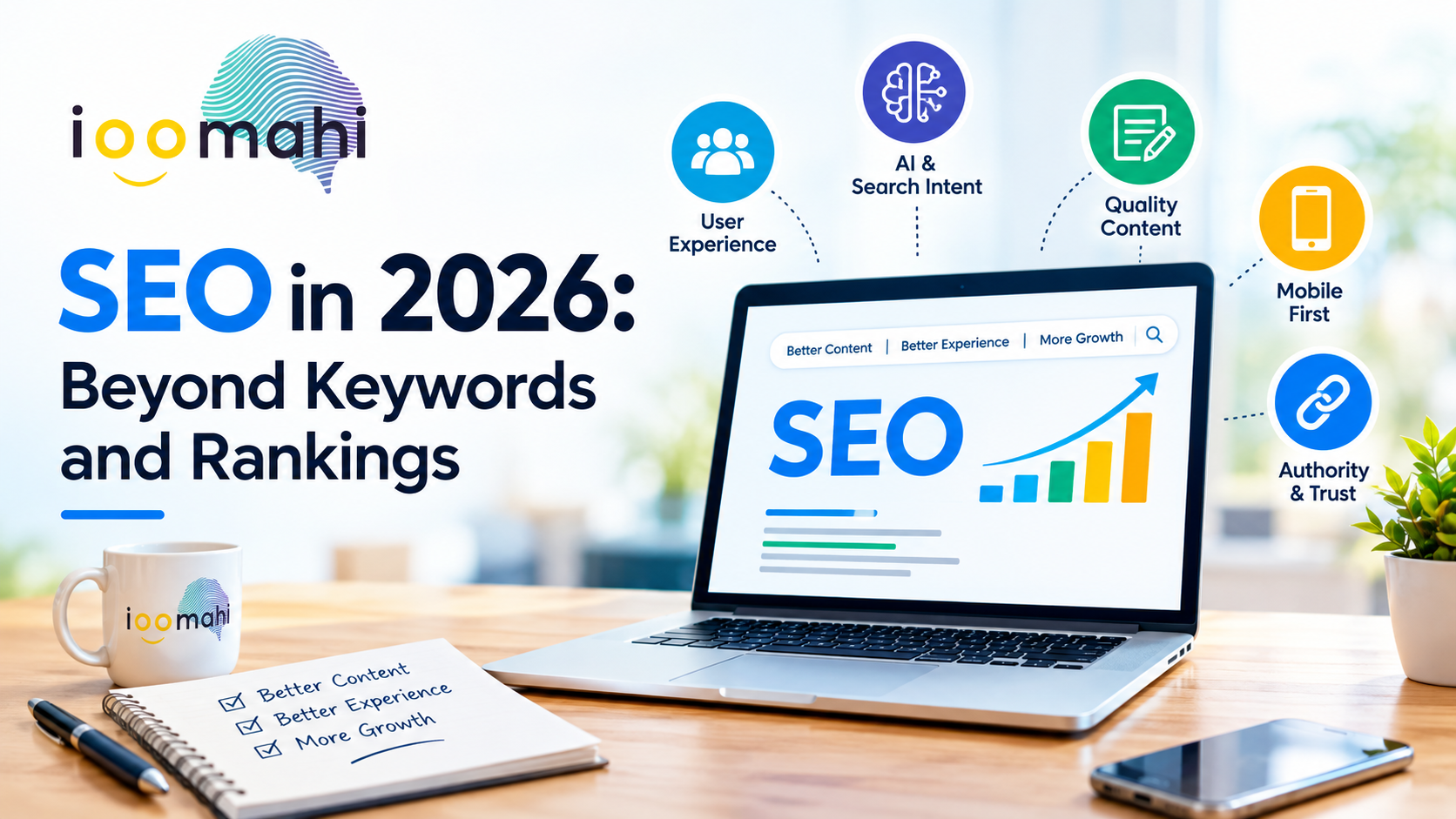
Search engine optimization has changed significantly. For years, SEO was largely associated with keywords, backlinks, technical optimization, and search rankings. In 2026, however, businesses need to think beyond simply getting a page to rank for a particular keyword.
Modern SEO is increasingly connected to search intent, helpful content, user experience, brand visibility, structured data, AI-powered search, and overall online authority. Searchers may discover information through traditional search results as well as AI-generated answers, featured results, maps, videos, social platforms, and other digital experiences.
This means businesses need a broader SEO strategy that focuses on being discoverable, useful, trustworthy, and relevant wherever potential customers search for information.
How SEO Has Changed in 2026
Traditional SEO often focused on questions such as:
- Which keywords should we target?
- What is our search ranking?
- How many backlinks do we have?
- How much organic traffic are we receiving?
These metrics still matter, but they don’t tell the entire story.
A modern SEO strategy also considers whether content satisfies the user’s actual need, whether the website provides a good experience, whether the brand is recognized across relevant digital channels, and whether its information can be easily understood by modern search systems.
Read this – SEO Optimization
Search Intent Matters More Than Keyword Density
Keywords remain useful for understanding what people search for, but repeatedly inserting keywords into content is not a sustainable SEO strategy.
Instead, businesses should identify the intent behind a search query.
For example, someone searching for “best CRM for small business” may want comparisons, pricing information, features, and recommendations. A page that simply defines CRM software may not satisfy that user’s needs.
Create Content Around Real Questions
Before creating a page, ask:
- What problem is the user trying to solve?
- What information do they need?
- What action might they take next?
- What would make the page genuinely useful?
- Does the content provide something beyond generic information?
This approach naturally creates content that is more aligned with search intent.
AI Search Is Changing Content Discovery
AI-powered search experiences are changing how users interact with information online.
Instead of always clicking through multiple search results, users may receive synthesized answers and then choose which sources, brands, or websites to explore further.
For businesses, this creates a broader visibility challenge.
SEO is no longer only about appearing in a list of blue links. Brands also need to create content that clearly communicates facts, expertise, context, and useful answers.
Build Topic Authority
Publishing hundreds of disconnected articles isn’t necessarily an effective content strategy.
A stronger approach is to develop topic authority.
For example, a cybersecurity company could build a content ecosystem covering:
- Cybersecurity fundamentals
- Endpoint security
- Cloud security
- Identity management
- Security compliance
- Threat detection
- Security operations
- Industry-specific security challenges
Related pages can support one another through thoughtful internal linking while creating a deeper resource around a particular subject.
Read this – AI SEO Tools
Pillar Pages and Supporting Content
A pillar page can provide a comprehensive overview of a topic, while supporting articles address specific questions in greater depth.
This structure helps users navigate information and gives businesses a systematic approach to building topical coverage.
First-Hand Experience Can Add More Value
Generic content is easy to produce.
Experience-based content is harder to replicate.
Businesses can strengthen their content by including:
- Original research
- Expert interviews
- Case studies
- Customer examples
- Product demonstrations
- Industry observations
- Data and analysis
- Practical lessons
For example, instead of publishing another generic article about email marketing, a company could publish campaign findings based on its own experiments and explain what worked, what didn’t, and why.
Technical SEO Still Matters
Although SEO has expanded beyond technical optimization, technical foundations remain important.
Websites should pay attention to:
- Crawlability
- Indexability
- Site architecture
- Mobile usability
- Page performance
- HTTPS
- Canonicalization
- XML sitemaps
- Structured data
- Internal linking
- Broken links and redirects
A technically problematic website can make it more difficult for search engines and users to access valuable content.
User Experience Is Part of the SEO Conversation
Getting someone to visit a website is only one part of organic search success.
Visitors should be able to quickly understand:
- What the business does
- What the page offers
- Where to find relevant information
- What action they can take next
Clear navigation, readable content, fast pages, responsive design, accessible layouts, and strong calls to action can improve the overall experience.
Brand Visibility Beyond Google
Modern search behavior doesn’t happen exclusively on traditional search engines.
Depending on the audience and industry, people may discover businesses through:
- YouTube
- Social media
- Online communities
- Business directories
- Review platforms
- Maps
- News websites
- Industry publications
- AI-powered search tools
This makes digital brand visibility an increasingly important part of an organic growth strategy.
Read this – SEO Automation
Structured Data and Machine-Readable Information
Search engines need to understand what a webpage represents.
Structured data can help communicate information about suitable content types, such as products, organizations, articles, events, recipes, and other entities.
While structured data does not guarantee enhanced search visibility, implementing relevant markup correctly can make website information easier for search systems to interpret.
Measure More Than Rankings
Rankings are useful, but businesses should avoid treating them as the only measure of SEO performance.
A broader measurement framework can include:
Visibility
Monitor organic impressions, search presence, branded searches, and visibility across relevant search experiences.
Engagement
Track metrics such as organic sessions, engaged visits, content interaction, and returning visitors.
Conversions
Measure leads, purchases, registrations, enquiries, downloads, and other meaningful business actions.
Revenue
For commercial websites, connect organic traffic with pipeline and revenue wherever reliable attribution is possible.
The objective is to understand whether SEO is contributing to business growth—not simply whether a keyword moved from position 8 to position 4.
The Future of SEO Is Multidisciplinary
SEO increasingly overlaps with several areas of digital marketing.
A successful strategy may involve:
- Content marketing
- Technical development
- UX design
- Digital PR
- Branding
- Social media
- Video marketing
- Data analytics
- Conversion optimization
- AI-assisted content workflows
This means SEO professionals increasingly need to understand how search fits into the complete customer journey.
Key Takeaways
- SEO in 2026 goes beyond keywords and rankings.
- Search intent should guide content creation.
- AI-powered search is expanding the ways users discover information.
- Topic authority can provide a stronger content strategy than isolated articles.
- Original research and first-hand experience can make content more useful.
- Technical SEO remains an essential foundation.
- Brand visibility across multiple digital channels matters.
- Rankings should be combined with engagement, conversions, and business outcomes.
- SEO works best when content, technology, UX, branding, and analytics work together.
Conclusion
SEO in 2026 is increasingly about visibility, usefulness, authority, and trust—not just rankings.
Keywords remain an important part of search optimization, but they are now one element of a much larger strategy. Businesses that focus on satisfying search intent, building authoritative content, improving technical performance, strengthening their brand, and measuring meaningful business outcomes can create a more sustainable organic search presence.






How to Become a YouTuber in 2026 - The Complete Step-by-Step
[…] Read this – SEO in 2026 – Beyond Keywords and Rankings […]