- Shabhana s
- B2B Marketing, B2C Marketing, business growth, Business Strategy, Conversion Rate, Customer Acquisition, digital marketing, Digital Marketing vs Sales, Digital Sales, Lead Generation, Marketing and Sales, Marketing ROI, Marketing Strategy, Online Marketing, Revenue Growth, Sales, Sales Conversion, Sales Funnel, Sales Strategy
- 0 Comments
- 7 Views
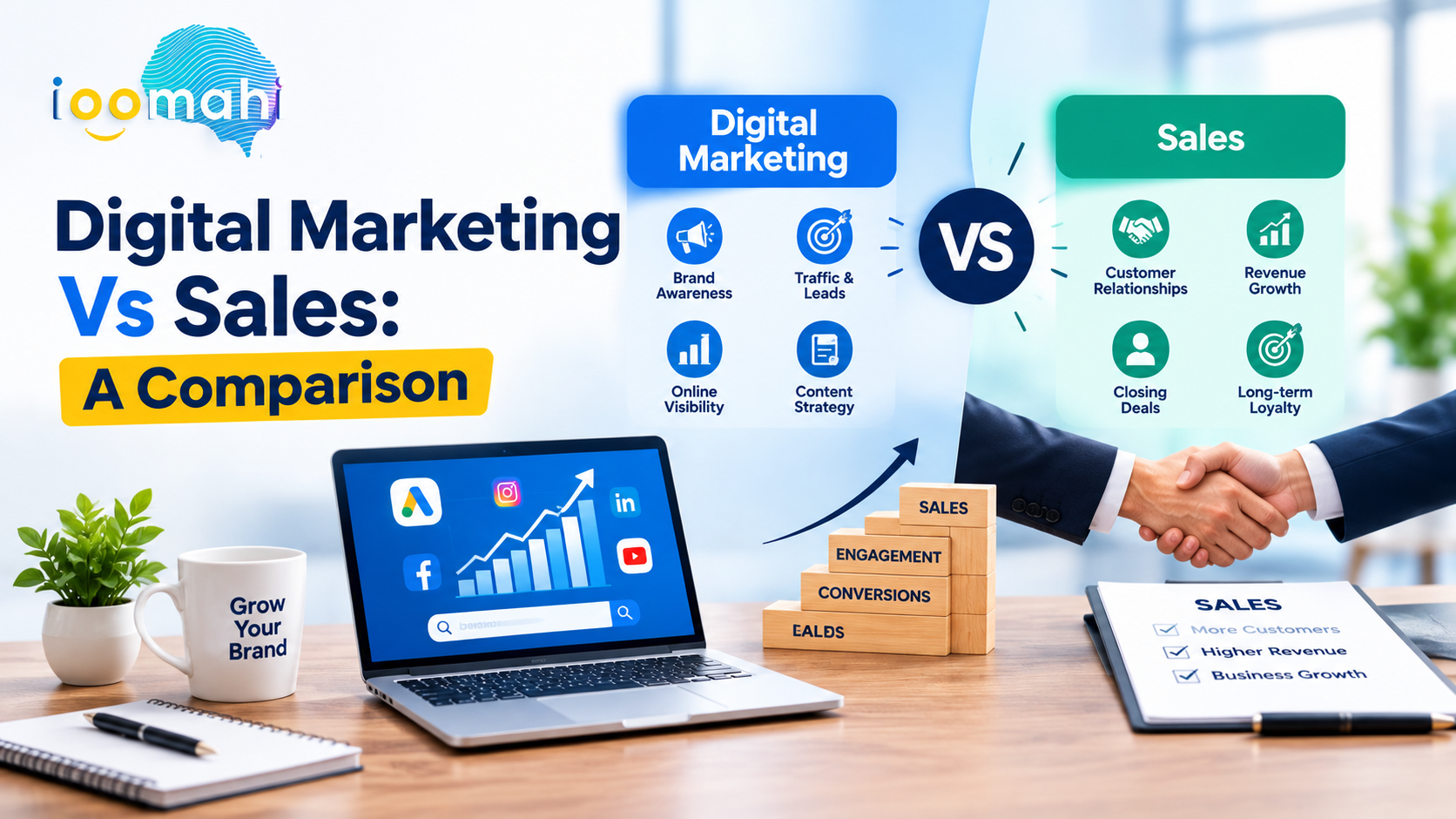
Digital marketing and sales are two essential functions of a successful business, but they serve different purposes in the customer journey. Digital marketing focuses on attracting the right audience, creating awareness, generating interest, and building relationships through online channels. Sales, on the other hand, focuses on converting qualified prospects into paying customers and generating direct revenue.
Although they have different responsibilities, digital marketing and sales work best when they operate together. Marketing can bring potential customers into the sales funnel, while sales teams can turn those opportunities into actual business. Understanding the difference between digital marketing vs sales can help companies allocate resources effectively, improve customer acquisition, and build a stronger revenue strategy.
What Is Digital Marketing?
Digital marketing refers to promoting a business, product, or service through digital channels. It allows businesses to reach specific audiences based on factors such as interests, search behavior, demographics, location, and online activity.
Common digital marketing channels include:
- Search engine optimization (SEO)
- Search engine marketing (SEM)
- Social media marketing
- Email marketing
- Content marketing
- Display advertising
- Video marketing
- Influencer marketing
- Affiliate marketing
The primary objective is usually to attract and engage potential customers before they are ready to make a purchase.
Key Goals of Digital Marketing
Digital marketing can help businesses:
- Increase brand awareness
- Generate website traffic
- Build an online audience
- Generate leads
- Educate potential customers
- Improve customer engagement
- Support long-term brand growth
For example, a company may publish an SEO-focused blog that attracts people searching for solutions related to its products. Those visitors can later become leads and eventually customers.
Read this – http://Digital Marketing vs Sales: Key Differences & Comparison
What Is Sales?
Sales is the process of directly engaging with prospects and helping them make a purchasing decision. Depending on the business model, sales can happen through phone calls, meetings, emails, demonstrations, online consultations, or direct conversations.
Sales professionals often work with prospects who have already shown some level of interest.
Key Goals of Sales
The sales function typically focuses on:
- Converting leads into customers
- Increasing revenue
- Understanding customer requirements
- Handling objections
- Negotiating pricing and terms
- Closing deals
- Building customer relationships
- Increasing customer value
For example, when a potential customer submits a request for a product demonstration, a sales representative may contact that person, understand their needs, explain the solution, answer questions, and guide them toward a purchase.
Digital Marketing vs Sales: Key Differences
Although both contribute to business growth, their approaches are different.
| Factor | Digital Marketing | Sales |
|---|---|---|
| Primary purpose | Attract and nurture prospects | Convert prospects into customers |
| Main focus | Awareness, engagement and lead generation | Conversion and revenue |
| Customer interaction | Often indirect or automated | Usually direct and personalized |
| Typical channels | Search, social media, email, content and ads | Calls, meetings, demos and emails |
| Time horizon | Often medium to long term | Often focused on immediate or near-term opportunities |
| Key metrics | Traffic, leads, engagement, conversions | Deals, revenue, win rate and sales value |
| Audience | Broad or targeted segments | Individual prospects or accounts |
How Digital Marketing Supports Sales
Digital marketing can make the sales process more efficient by delivering qualified prospects to the sales team.
A potential customer may first discover a company through Google, social media, an advertisement, or a blog post. After interacting with several pieces of content, the customer may download a resource, subscribe to an email list, request information, or submit a contact form.
At that point, sales can take over and continue the conversation.
This creates a connected customer journey:
Awareness → Interest → Lead → Qualification → Sales Conversation → Purchase → Retention
When these stages work together, businesses can reduce the gap between marketing activity and revenue generation.
Can sales improve digital marketing get more information here – http://Digital Marketing vs Sales: Key Differences & Comparison
How Sales Can Improve Digital Marketing
The relationship also works in the opposite direction. Sales teams communicate directly with customers and prospects every day, giving them valuable insights into customer concerns and purchasing behavior.
Sales representatives can identify:
- Frequently asked questions
- Common objections
- Pricing concerns
- Product expectations
- Competitor comparisons
- Reasons customers choose or reject a product
Marketing teams can use this information to create more relevant content, landing pages, advertisements, email campaigns, and case studies.
Which Is More Important: Marketing or Sales?
There is no universal answer because the importance of each function depends on the business model, industry, customer journey, and sales cycle.
A business selling low-cost products online may depend heavily on digital marketing and e-commerce optimization. A company selling complex enterprise software may require a strong sales team because customers often need demonstrations, consultations, negotiations, and technical discussions before purchasing.
Therefore, businesses should not treat digital marketing and sales as competing departments. They should be viewed as connected parts of the same revenue process.
Digital Marketing and Sales Should Work Together
The strongest businesses create alignment between marketing and sales.
Marketing can define the target audience, generate demand, produce content, and capture leads. Sales can qualify those leads, communicate directly with prospects, close opportunities, and provide feedback to marketing.
Both teams should agree on:
- Target customer profiles
- Lead qualification criteria
- Customer journey stages
- Campaign objectives
- Revenue targets
- Lead handoff processes
- Performance metrics
A shared CRM and reliable analytics can also help both teams understand where prospects are coming from and which activities are contributing to revenue.
How to Measure Digital Marketing and Sales
Different metrics should be used to evaluate each function.
Digital Marketing Metrics
Important digital marketing metrics include:
- Website traffic
- Organic search traffic
- Cost per lead
- Click-through rate
- Conversion rate
- Social media engagement
- Email open and click rates
- Marketing-qualified leads
- Customer acquisition cost
Sales Metrics
Sales teams can track:
- Number of qualified opportunities
- Conversion rate
- Win rate
- Average deal size
- Sales cycle length
- Revenue generated
- Customer lifetime value
- Sales pipeline value
Looking at both sets of metrics together provides a more complete picture of business performance.
Read this – http://Digital Marketing vs Sales: Key Differences & Comparison
Key Points
- Digital marketing primarily attracts, engages, and nurtures potential customers.
- Sales focuses on converting prospects into paying customers.
- Marketing can generate leads that sales teams can qualify and convert.
- Sales feedback can help marketing create more effective campaigns and content.
- The right balance depends on the company’s industry and business model.
- Marketing and sales alignment can improve customer acquisition and revenue.
- Both teams should work toward shared business and revenue objectives.
Conclusion
The comparison between digital marketing vs sales is not really about choosing one over the other. Digital marketing creates visibility, attracts potential customers, and builds demand, while sales turns qualified opportunities into revenue through direct customer interactions.
Businesses that separate these functions completely may miss valuable opportunities. Instead, marketing and sales should share customer insights, data, goals, and processes. When both teams work as part of one connected strategy, companies can create a smoother customer journey, improve lead quality, increase conversions, and build sustainable revenue growth.