- Shabhana s
- Best Email Marketing Tools, Business Marketing, digital marketing, Email Automation, Email Campaigns, Email Marketing, Email Marketing for Business, Email Marketing Software, Email Marketing Strategy, Email Marketing Tools, Email Subscribers, Free Email Marketing Tools, Lead Generation, Marketing Automation
- 0 Comments
- 32 Views
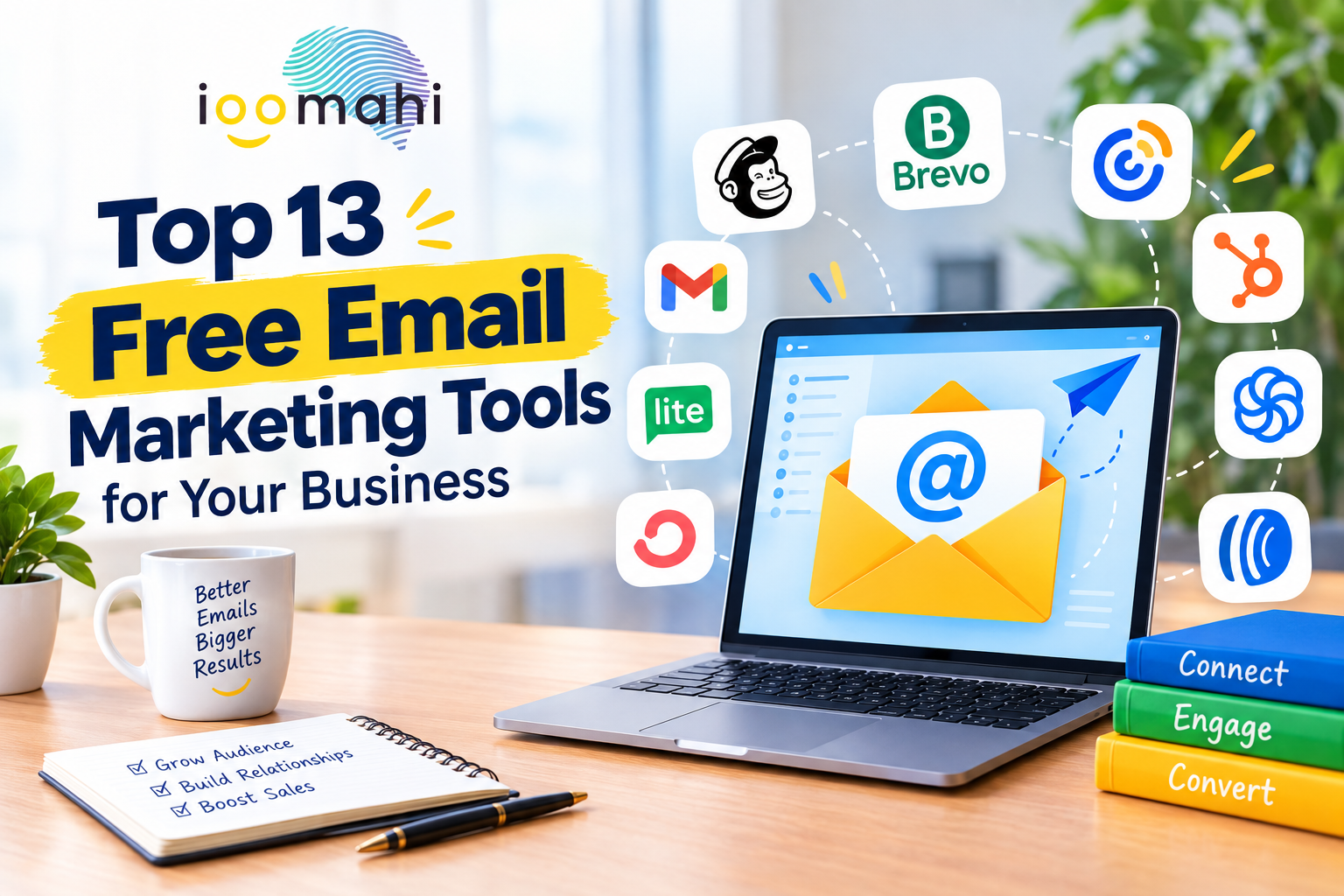
Email marketing remains one of the most practical ways for businesses to communicate directly with customers, nurture leads, promote products, and build long-term relationships. For startups and small businesses, however, investing in expensive marketing software from day one may not always be practical.
Fortunately, several email marketing platforms offer free plans in 2026. These plans can provide useful features such as email campaign creation, contact management, newsletters, automation, segmentation, landing pages, and analytics. However, the definition of “free” varies considerably: some platforms limit subscribers, while others restrict daily or monthly email sends. Free-plan limits have also changed significantly during 2026, so older comparison articles may contain outdated information.
This guide compares 13 free email marketing tools and explains which type of business or marketer each platform may suit best.
What Should You Look for in a Free Email Marketing Tool?
Before selecting a platform, businesses should look beyond the word “free.”
Consider these factors:
- Number of subscribers or contacts allowed
- Monthly or daily email sending limits
- Email automation
- Templates and drag-and-drop editors
- Signup forms and landing pages
- Audience segmentation
- Analytics and reporting
- E-commerce integrations
- CRM capabilities
- Platform branding
- Upgrade pricing
A free plan may be perfect for a small newsletter but unsuitable for an e-commerce company sending several campaigns every week.
Top 13 Free Email Marketing Tools in 2026
1. Brevo
Best for: Small businesses and large contact lists
Brevo is one of the most flexible free options for businesses that have many contacts but do not need to email all of them every day.
Its free plan allows unlimited contacts while limiting sending to 300 emails per day. It also combines email marketing with broader sales and marketing features, including CRM capabilities.
Key Features
- Unlimited contacts
- 300 emails per day
- Email campaigns
- Marketing automation
- CRM functionality
- Segmentation
- Signup forms
Why choose it: Brevo is particularly useful when your contact database is large but your sending frequency is relatively low.
2. Sender
Best for: Small businesses wanting generous free limits
Sender stands out for the combination of subscribers, monthly sending capacity, automation, and segmentation available on its free plan.
Current comparisons list up to 2,500 subscribers and 15,000 emails per month, along with automation capabilities.
Key Features
- Up to 2,500 subscribers
- Up to 15,000 emails per month
- Email automation
- Audience segmentation
- Newsletter campaigns
- Signup forms
Why choose it: It offers a strong combination of list size and sending volume for businesses starting email marketing.
3. Kit
Best for: Creators, bloggers, and newsletter businesses
Kit, formerly known as ConvertKit, focuses heavily on creators and newsletter publishers.
Current 2026 comparisons list a free subscriber limit of up to 10,000 subscribers, making it particularly attractive for creators who prioritize audience growth.
Key Features
- Large free subscriber allowance
- Newsletter publishing
- Subscriber management
- Landing pages
- Creator-focused tools
- Basic automation
Why choose it: Kit is a strong option for bloggers, creators, authors, and newsletter-focused businesses.
Read here – Email Automation
4. EmailOctopus
Best for: Businesses wanting a simple email marketing platform
EmailOctopus is designed around straightforward email campaigns and subscriber management.
Current comparisons list a free plan supporting up to 2,500 subscribers and 10,000 email sends per month.
Key Features
- Email campaigns
- Subscriber segmentation
- Templates
- Basic automation
- Signup forms
- Analytics
Why choose it: Its relatively simple interface can be useful for businesses that do not need a complicated marketing platform.
5. MailerLite
Best for: Beginners and small businesses
MailerLite is known for its user-friendly email editor, landing pages, forms, and marketing tools.
However, businesses should pay close attention to the current free-plan limits because MailerLite changed its free offering during 2026. Recent sources report a limit of 250 subscribers and 2,500 monthly emails on the current free tier.
Key Features
- Drag-and-drop email editor
- Landing pages
- Signup forms
- Automation
- Website tools
- Email templates
Why choose it: It remains a useful choice for beginners with a relatively small subscriber base.
6. Mailchimp
Best for: Beginners who want a widely recognized platform
Mailchimp remains one of the best-known email marketing platforms. Its ecosystem includes email campaigns, templates, audience management, analytics, and integrations.
However, its free plan has become substantially more limited in 2026. Recent comparisons report a 250-contact and 500-send monthly limit.
Key Features
- Email campaign builder
- Templates
- Audience management
- Analytics
- Integrations
- Basic marketing tools
Why choose it: It can be a convenient starting point for very small lists, especially for users already familiar with the platform.
7. HubSpot
Best for: Businesses that want email marketing connected to a CRM
HubSpot takes a broader approach than a standalone email marketing platform. Its free ecosystem combines CRM capabilities with marketing and sales tools.
The platform provides free email marketing functionality, making it attractive for small teams that want customer data and marketing activities connected in one ecosystem.
Key Features
- Email marketing
- CRM
- Contact management
- Templates
- Reporting
- Marketing tools
Why choose it: HubSpot is particularly useful when email campaigns are part of a broader lead-management process.
8. Omnisend
Best for: Small e-commerce businesses
Omnisend is designed specifically around e-commerce marketing.
Its strengths include customer segmentation, automated campaigns, and workflows designed for online stores. Current comparisons include Omnisend among platforms offering free email marketing plans, although its free tier is relatively limited in sending volume.
Key Features
- E-commerce automation
- Customer segmentation
- Email campaigns
- Signup forms
- Automated workflows
- Store integrations
Why choose it: Online stores can benefit from e-commerce-specific automation rather than relying on a generic newsletter platform.
9. Klaviyo
Best for: E-commerce brands
Klaviyo is strongly focused on customer data, e-commerce marketing, segmentation, and behavioral automation.
Its free plan is more limited in volume, but it can be useful for businesses that want to explore advanced e-commerce marketing workflows before committing to a paid plan.
Key Features
- Customer segmentation
- Behavioral automation
- E-commerce integrations
- Email campaigns
- Analytics
- Personalized marketing
Why choose it: It is worth considering when revenue-focused e-commerce automation is more important than a large free sending allowance.
10. Mailjet
Best for: Businesses combining marketing and transactional email
Mailjet provides tools for email campaigns as well as transactional email use cases.
Current 2026 comparisons continue to list Mailjet among platforms with free email options.
Key Features
- Email campaigns
- Transactional email
- Templates
- Email editor
- Developer-focused capabilities
- Analytics
Why choose it: Mailjet can be useful for businesses that need both marketing communications and application-generated emails.
Read here – Business Email Marketing
11. Zoho Campaigns
Best for: Businesses already using Zoho products
Zoho Campaigns is part of the wider Zoho ecosystem and can be useful for companies that already use Zoho CRM or other Zoho business applications.
Recent 2026 pricing research for the Indian market reports a free plan of up to 2,000 contacts and 6,000 emails per month.
Key Features
- Email campaigns
- Marketing automation
- Contact management
- Segmentation
- Analytics
- Zoho ecosystem integration
Why choose it: Businesses already using Zoho can benefit from keeping marketing activities connected to their existing software ecosystem.
12. beehiiv
Best for: Newsletter publishers and content businesses
beehiiv is designed primarily around newsletters and audience growth.
Current 2026 comparisons list a free plan supporting up to 2,500 subscribers with unlimited email sends, making it attractive for publishers who send frequently.
Key Features
- Newsletter publishing
- Subscriber management
- Audience growth tools
- Analytics
- Newsletter-focused features
Why choose it: It is particularly suitable for newsletter creators who prioritize publishing and audience growth.
13. AWeber
Best for: Beginners seeking a traditional email marketing platform
AWeber is an established email marketing platform offering campaign creation, templates, automation, and subscriber management.
However, businesses should verify the current plan structure before choosing it because free-plan availability and limits can change over time. Some 2026 comparisons continue to list a free tier with limited subscribers and sends.
Key Features
- Email newsletters
- Templates
- Automation
- Subscriber management
- Analytics
- Signup forms
Why choose it: It can be suitable for beginners who prefer a conventional email marketing workflow.
Quick Comparison of the Top Free Email Marketing Tools
| Tool | Best For | Key Free-Plan Advantage |
|---|---|---|
| Brevo | Small businesses | Unlimited contacts |
| Sender | Growing businesses | 2,500 subscribers and high send allowance |
| Kit | Creators | Up to 10,000 subscribers |
| EmailOctopus | Simple campaigns | 2,500 subscribers |
| MailerLite | Beginners | Easy editor and landing pages |
| Mailchimp | New users | Familiar platform and ecosystem |
| HubSpot | CRM-focused businesses | Email + CRM |
| Omnisend | E-commerce | E-commerce automation |
| Klaviyo | E-commerce brands | Behavioral marketing |
| Mailjet | Marketing + transactional email | Developer-friendly capabilities |
| Zoho Campaigns | Zoho users | Zoho ecosystem integration |
| beehiiv | Newsletters | Unlimited sends on free plan |
| AWeber | Beginners | Traditional email marketing features |
Free-plan limits can change. Always verify the current limits and feature availability on the provider’s official pricing page before choosing a platform.
How to Choose the Right Free Email Marketing Tool
For Small Businesses
If you have a small customer database and send regular newsletters, look for a platform with a reasonable subscriber limit, simple templates, analytics, and basic automation.
Sender, Brevo, EmailOctopus, and MailerLite are worth comparing.
For Large Contact Lists
If your list is large but you do not send emails every day, a platform such as Brevo can be attractive because its free plan is based primarily on daily sending rather than a traditional contact ceiling.
For Creators
Newsletter writers, bloggers, and content creators may prefer Kit or beehiiv, depending on whether they prioritize creator tools, audience growth, or newsletter publishing.
For E-Commerce
Online stores should consider platforms built around customer behavior and shopping activity.
Klaviyo and Omnisend are particularly relevant for e-commerce use cases.
For CRM and Lead Management
Businesses that want email campaigns connected with customer records can consider HubSpot or Zoho Campaigns, particularly if they already use those ecosystems.
Benefits of Using Free Email Marketing Software
Lower Marketing Costs
A free plan allows startups and small businesses to begin email marketing without a major software investment.
Easy Testing
Businesses can test newsletters, welcome emails, lead magnets, and basic campaigns before committing to a paid subscription.
Audience Building
Email tools make it easier to collect subscribers through signup forms and landing pages.
Automation Opportunities
Some free plans provide basic automation, allowing businesses to send welcome messages and other triggered communications automatically.
Performance Tracking
Most modern platforms provide reporting that can help marketers understand campaign engagement and improve future emails.
Limitations of Free Email Marketing Tools
Free does not mean unlimited.
Businesses may encounter:
- Subscriber limits
- Daily sending limits
- Monthly sending limits
- Platform branding
- Restricted automation
- Limited analytics
- Fewer integrations
- Reduced customer support
- Limited segmentation
Free plans also change. Several major platforms have reduced their free allowances during 2026, which makes checking current pricing particularly important.
Read here – Email Marketing Skills
Best Practices for Email Marketing
Choosing the right software is only one part of successful email marketing.
Businesses should also:
- Build a permission-based email list.
- Avoid purchasing email databases.
- Write clear and relevant subject lines.
- Keep email content concise and useful.
- Optimize emails for mobile devices.
- Segment subscribers where appropriate.
- Test different messages and calls to action.
- Monitor opens, clicks, conversions, and unsubscribes.
- Remove inactive or invalid addresses when appropriate.
- Give recipients a clear way to unsubscribe.
Key Points
- Free email marketing tools can help businesses start campaigns without a large software budget.
- Brevo is useful for businesses with large contact lists and lower daily sending requirements.
- Sender offers a strong combination of subscribers, sending volume, and automation.
- Kit and beehiiv are particularly useful for newsletter creators.
- Klaviyo and Omnisend are strong options for e-commerce businesses.
- HubSpot and Zoho Campaigns are useful when CRM integration matters.
- Free plans have important subscriber, sending, automation, and feature restrictions.
- Free-plan limits can change, so businesses should verify current pricing before signing up.
Conclusion
The best free email marketing tool depends on what your business actually needs. There is no single platform that offers the perfect combination of subscribers, sending volume, automation, analytics, integrations, and e-commerce features for everyone.
For a small business, Sender or Brevo may provide an attractive starting point. Creators can look toward Kit or beehiiv, while e-commerce businesses may benefit more from Klaviyo or Omnisend. Companies looking for email marketing alongside customer management can explore HubSpot or Zoho Campaigns.
The most important step is to choose a platform that fits your current audience size and marketing goals while giving you a realistic path to scale. A free plan can be an excellent way to test your email strategy, build an audience, and understand what features your business actually needs before investing in a paid solution.