- Shabhana s
- Business Ideas, Digital Business, E-commerce, Online Business, Online Entrepreneurship, Small Business, Startup India
- 0 Comments
- 18 Views
Starting an online business in India has become increasingly accessible as digital payments, e-commerce platforms, social media, cloud-based tools, and online services continue to develop. Entrepreneurs can now build businesses from home or a small office and reach customers across cities and regions without necessarily investing in a traditional storefront.
However, launching an online business requires more than choosing a product and creating a social media account. Entrepreneurs need to identify a viable market, understand their customers, select the appropriate business model, manage legal and financial requirements, establish an online presence, and develop a reliable marketing strategy.
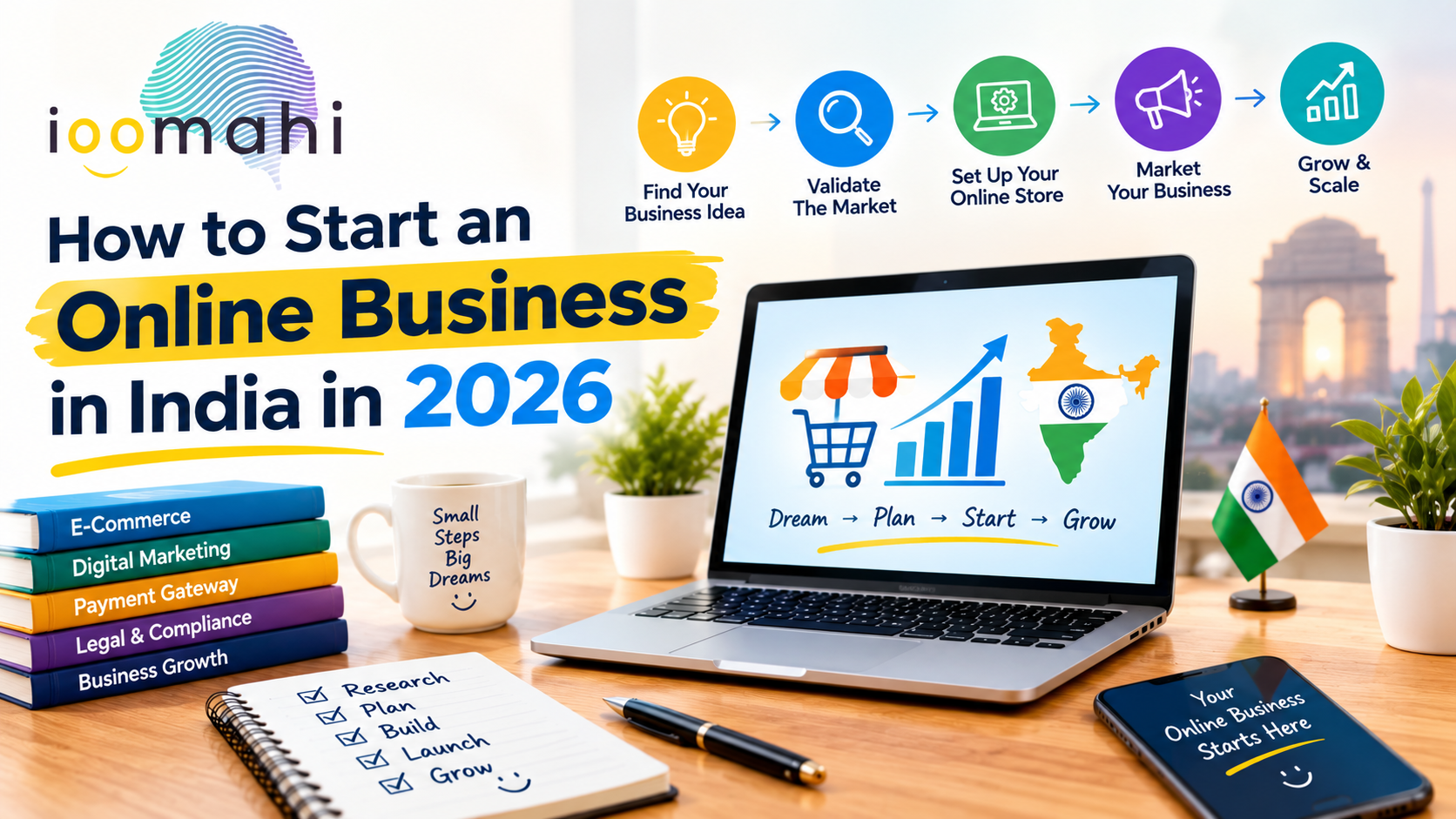
This guide explains the key steps involved in starting an online business in India in 2026 and provides a practical framework for turning an idea into a structured digital business.
Why Start an Online Business in India in 2026?
The online business environment offers opportunities across multiple industries. Businesses can sell physical products, provide professional services, create digital products, offer subscriptions, teach online, or operate marketplaces and technology-based services.
One major advantage of an online model is flexibility. Depending on the business type, entrepreneurs can begin with a relatively small operation and expand as demand increases.
Digital channels can also make it easier to communicate with customers, collect payments, promote products, and monitor business performance.
Choose a Business Model That Fits Your Skills
There is no single model that works for every entrepreneur. Common online business models include:
- E-commerce stores
- Online consulting
- Freelancing services
- Digital marketing agencies
- Online education and courses
- Software and SaaS products
- Affiliate marketing
- Content-based businesses
- Subscription services
- Digital products
- Home-based product businesses
The right model depends on your skills, available capital, target market, competition, and long-term objectives.
Step 1: Find a Profitable Online Business Idea
The first step is identifying a problem that customers are willing to pay to solve.
Instead of selecting an idea only because it appears popular, examine the demand behind it. Research what customers are searching for, what problems they frequently discuss, and what existing businesses are offering.
Research Your Target Market
Market research can help you understand:
- Who your potential customers are
- What they need
- How much they may be willing to spend
- Where they currently buy products or services
- Who your competitors are
- What customers like or dislike about existing options
Google search trends, marketplace listings, social media discussions, customer reviews, surveys, and competitor websites can all provide useful research inputs.
Read this – 15 Best Online Reputation Management Tools
Step 2: Validate Your Business Idea
Before investing heavily, test whether your idea has genuine market demand.
You can start by creating a simple landing page, offering a limited product range, conducting surveys, speaking with potential customers, or running a small marketing campaign.
The objective is to gather evidence before making significant investments.
If potential customers show little interest, you can modify your product, pricing, positioning, or target audience before launching on a larger scale.
Step 3: Choose Your Business Structure
Once you have validated your concept, consider the appropriate business structure.
Depending on your circumstances, options may include:
- Sole proprietorship
- Partnership
- Limited Liability Partnership (LLP)
- Private limited company
- One Person Company (OPC)
Each structure has different legal, tax, compliance, ownership, and liability implications.
Entrepreneurs should evaluate these factors carefully and consider professional advice when necessary.
Step 4: Complete Relevant Registrations and Compliance
The registrations required for an online business depend on factors such as the business structure, turnover, industry, location, and activities involved.
Depending on the business, you may need to consider:
- PAN and business-related tax requirements
- GST registration where applicable
- Business bank account
- Applicable local registrations or licenses
- Import-export requirements for relevant businesses
- Industry-specific permissions
- Appropriate contracts and terms
Because Indian tax and regulatory requirements can change, verify current requirements through official government sources or a qualified professional before registering your business.
Step 5: Create Your Brand Identity
Your brand is more than your business name.
A strong online brand should have a recognizable identity and consistent communication across digital channels.
Develop:
- Business name
- Logo
- Brand colors
- Typography
- Brand voice
- Tagline, where appropriate
- Visual guidelines
- Core brand message
Before finalizing a name, check its availability and consider relevant trademark and domain-name considerations.
Read this – online reputation management
Step 6: Build a Professional Website
Your website can become the central hub of your online business.
Depending on your business model, it may function as an online store, service portfolio, booking platform, lead-generation website, educational platform, or information resource.
Important website elements include:
Mobile-Friendly Design
Your website should work smoothly on smartphones, tablets, and desktops.
Clear Navigation
Visitors should quickly understand what you offer and how they can contact you or make a purchase.
Strong Calls to Action
Use clear actions such as Buy Now, Request a Quote, Book a Consultation, or Contact Us, depending on your business.
Secure Checkout
If you sell online, provide a reliable and secure payment experience and clearly communicate shipping, returns, refunds, and other relevant policies.
Step 7: Set Up Online Payments
Digital payments are an important part of India’s online commerce ecosystem.
Depending on your business model, you may consider payment options such as UPI, cards, net banking, wallets, and payment gateways.
Choose a payment setup that provides customers with convenient payment methods while giving your business appropriate transaction records and settlement information.
Step 8: Decide How You Will Deliver Products or Services
For physical products, establish a clear fulfillment process.
Consider:
- Inventory management
- Packaging
- Shipping partners
- Delivery timelines
- Tracking
- Returns
- Refunds
- Customer support
For service businesses, define how customers will book, communicate, receive deliverables, and request support.
A smooth fulfillment process can have a major effect on customer experience.
Step 9: Develop an SEO Strategy
Search engine optimization can help potential customers discover your business organically.
Start by researching keywords relevant to your products or services. Then create useful pages and content that address customer search intent.
An SEO strategy may include:
- Keyword research
- On-page SEO
- Technical SEO
- Local SEO
- Content marketing
- Internal linking
- Image optimization
- Digital PR and link building
Avoid creating content exclusively for search engines. Focus on providing genuinely useful information to your target audience.
Read this – Online Sales
Step 10: Promote Your Business Online
Launching a website does not automatically generate customers. You need a strategy for reaching your audience.
Potential channels include:
- SEO
- Google Ads
- Social media marketing
- Email marketing
- Content marketing
- Influencer partnerships
- Video marketing
- Affiliate marketing
- Online communities
Start with channels that match your target audience and business model rather than spending money across every platform simultaneously.
Build an Email List
Email marketing can provide a direct communication channel with customers and prospects.
You can encourage visitors to subscribe by offering useful resources, product updates, educational content, discounts where appropriate, or other relevant incentives.
Step 11: Track Business Performance
Once your business starts receiving visitors, leads, and sales, measure the results.
Important metrics can include:
- Website traffic
- Conversion rate
- Customer acquisition cost
- Average order value
- Revenue
- Repeat purchases
- Lead volume
- Return on advertising spend
- Customer retention
These metrics can help you identify which activities are generating business results and where improvements may be necessary.
Common Mistakes to Avoid
Starting Without Market Research
A good idea still needs a market. Research demand before making significant investments.
Spending Too Much Too Early
Avoid committing large amounts of money to branding, inventory, technology, or advertising before validating demand.
Ignoring Customer Experience
Slow websites, unclear policies, poor communication, and delayed deliveries can negatively affect customer trust.
Trying Every Marketing Channel
Managing too many platforms can spread resources too thin. Focus on channels that are relevant to your audience.
Neglecting Financial Records
Maintain accurate records of revenue, expenses, taxes, payments, and business transactions from the beginning.
Key Takeaways
- Identify a clear customer problem before choosing your business idea.
- Research the market and competitors before launching.
- Validate demand with a small-scale test.
- Select an appropriate business structure.
- Complete applicable registrations and compliance requirements.
- Create a consistent and professional brand identity.
- Build a mobile-friendly website.
- Provide convenient and secure payment options.
- Establish reliable product or service delivery processes.
- Use SEO and digital marketing to attract customers.
- Track performance and improve your strategy continuously.
Conclusion
Starting an online business in India in 2026 can involve fewer physical barriers than a traditional storefront, but successful execution still requires careful planning. The strongest foundation comes from understanding your customers, validating demand, choosing an appropriate business model, handling applicable legal requirements, and creating a reliable digital presence.
Your first objective does not have to be building a huge company immediately. Instead, focus on solving a specific customer problem, delivering a quality experience, learning from early customers, and improving your operations as the business grows.
With a structured approach to branding, website development, payments, fulfillment, SEO, marketing, and measurement, an online business can develop from a small idea into a scalable digital venture.